Careful removal for difficult trees
Tree Removal in Garden Grove
Request an evaluation for your tree removal project. Get a Free Estimate
Careful removal for difficult trees
Request an evaluation for your tree removal project. Get a Free Estimate
Tree removal usually becomes necessary for one of a few practical reasons: the tree has died, decline is advanced, major structural problems are present, repeated limb failures have become a concern, roots or growth are creating an ongoing conflict, or the tree simply no longer fits the property. Whatever the reason, removal should begin with an assessment of both the tree and everything around it. A tree standing beside a driveway in an open front yard is a very different project from one stretching across a roof, pool, block wall, or neighboring property.
Tree Service Garden Grove plans removals around the actual work zone. We look at the size and lean of the tree, canopy distribution, trunk condition, nearby structures, available drop space, access for hauling, and any obstacles that influence how sections can be handled.
Many local removals cannot be completed by simply cutting a tree at the base. Mature trees often stand in backyards where the open space beneath the canopy has gradually disappeared under patios, additions, landscaping, utility areas, and neighboring improvements. In those situations, the tree may need to be dismantled in sections from the top down, with limbs and trunk pieces handled according to the space below.
The goal is not speed at any cost. It is to create a sequence that keeps the work organized. We consider where material will land, how it will be moved, and which sections should come out first to reduce weight or improve access. If you want to discuss a difficult tree before requesting an estimate, call (714) 786-3832.
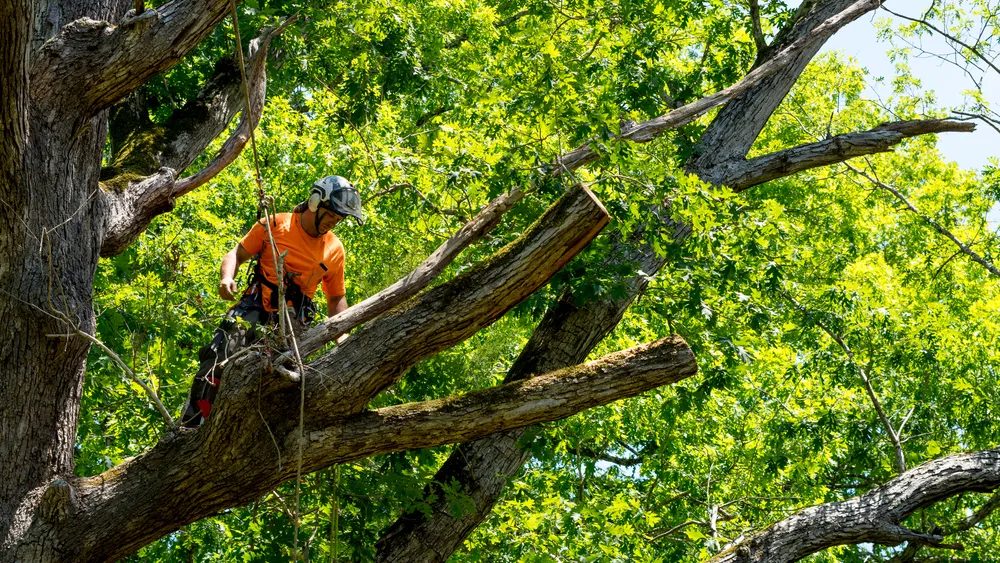
## Reasons Property Owners Call Us We remove dead trees, declining trees, storm-damaged trees, trees with repeated branch failures, trees that have outgrown their usable space, and trees that interfere with planned property changes. Some removals are obvious because a tree has already failed. Others require a more measured decision because the tree is still standing but has become expensive, disruptive, or difficult to manage. ### Removal Near Homes and Structures Trees beside roofs, garages, walls, sheds, pools, and neighboring yards generally require more controlled sectional work. Before cutting begins, we identify the areas that must remain protected and determine how limbs and wood can be moved through the property. ### Cleanup and Material Handling Removal creates a significant volume of branches, foliage, and wood. We plan the debris route before work starts and consolidate material as the project progresses. Unless the estimate states otherwise, the work scope should make clear what is being removed from the property and what, if anything, will remain. ### Making the Removal Decision We do not assume every inconvenient tree needs to disappear. If selective trimming can reasonably solve the problem, that may be the better option. If the tree has severe decline, structural concerns, recurring conflicts, or a location that makes continued maintenance impractical, removal may offer the clearer long-term solution.
Dead trees can lose strength over time and may begin shedding limbs or sections unpredictably. We evaluate access, nearby targets, and the condition of the remaining wood before planning removal.
Large trees require careful sequencing because both the canopy and trunk produce heavy material. We plan the work around available space, property protection, and the route for removing debris.
Backyard trees often involve narrow access, walls, landscaping, pools, patios, or neighboring property. These projects may require smaller sections and more controlled handling than open-yard removals.
A tree may be healthy enough to live but still create a persistent conflict with structures, usable space, access, or property plans. We can help you weigh removal against continued maintenance.
Commercial projects require attention to vehicles, customers, tenants, signs, pedestrian areas, and operating schedules. We plan the work zone and debris movement around the site's practical needs.
| Service | Estimated Cost | Average |
|---|---|---|
| Small tree removal | $350–$850 | $600 |
| Medium tree removal | $700–$1,800 | $1,200 |
| Large tree removal | $1,500–$4,500+ | $2,750 |
| Difficult-access removal | $1,800–$6,000+ | $3,500 |
These are general planning ranges, not quotes. Height, trunk diameter, condition, access, obstacles, rigging needs, equipment, hauling volume, and site restrictions can change the final price significantly.
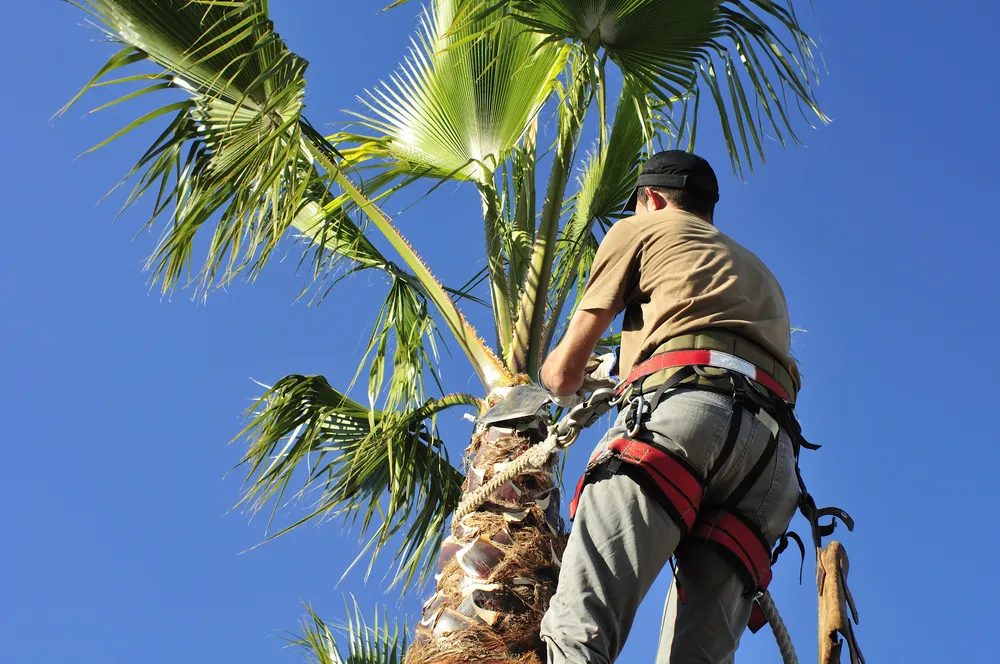
We consider the structures and landscaping below the tree before deciding how sections should be taken down.
Narrow gates, block walls, pools, patios, and crowded side yards are common locally, so access planning is part of the estimate.
We explain what is being removed, how site conditions affect the job, and what debris handling is included.
If selective trimming can solve the problem without removing a useful tree, we will discuss that option.
If a tree is dead, damaged, crowded, or becoming too difficult to maintain, request a tree removal estimate.
Free — no obligations
Tell us its approximate size, location, condition, and what is prompting you to consider removal.
We review access, nearby structures, surrounding landscaping, obstacles, and the available space for handling material.
The sequence is based on the tree's size, lean, branch distribution, condition, and what must be protected below.
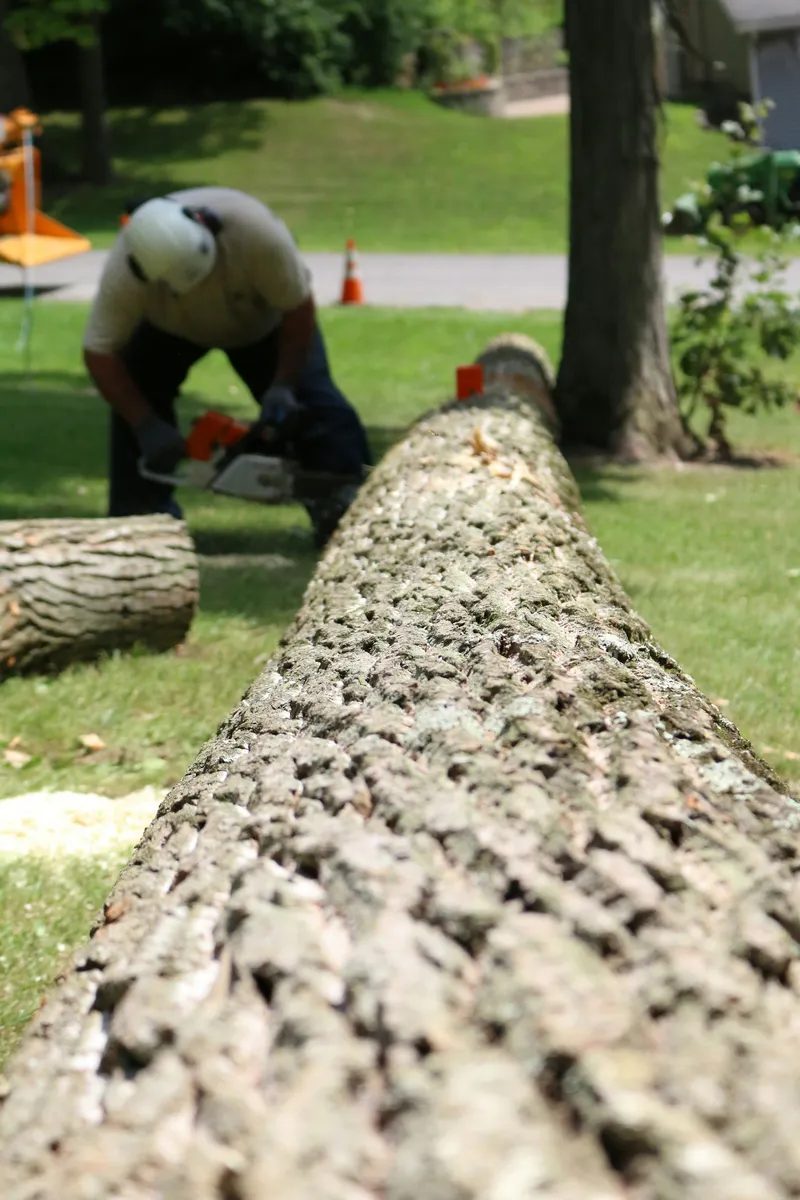
The canopy and trunk are taken down in a controlled sequence suited to the site.
Debris covered by the agreed scope is consolidated and removed so the work area is left orderly.